









The Department of Education (DepEd) is working to ensure Filipino students are equipped with strong reading, writing and math skills while preparing them for a future in which artificial intelligence (AI) will be part of everyday life and work.
In a televised interview Friday, Education Secretary Sonny Angara said DepEd’s immediate priority is to improve the foundations of learning, even as it introduces students and teachers to AI.
“The crucial thing is to orient all of our teachers. And the long-term goal is to have most, if not all, of our students really be conversant with artificial intelligence,” he said.
“Since AI will be, as mentioned by the President in his State of the Nation (SONA) address, will be permeating all industries, all aspects of life, it’s crucial that as part of lifelong learning, our students, our teachers, and maybe even later on, even our communities can partake in boning up on AI,” he added.
President Ferdinand R. Marcos Jr. in his SONA on Monday urged Filipinos to embrace AI, noting that the Philippines must be ready for a future where all industries would be using AI.
He said the government, through the Department of Information and Communications Technology (DICT) has launched massive AI training for about 1.8 million individuals, including students, parents, and teachers, to ensure the global competitiveness of Filipinos across sectors.
“AI is here to stay; and so, we adopt it to harness its potential to enhance critical sectors, from our educational system to our industries,” the President said.
“Within and beyond the academe, we must inculcate in our youth the virtues of critical thinking, innovativeness, creativity, as well as the ability to find solutions to problems,” he added.
Meanwhile, Angara noted that while some students have used AI to complete assignments, the bigger challenge is helping learners and teachers understand how to use the technology responsibly as it becomes more common across different industries.
However, he also stressed that technology cannot make up for weak learning fundamentals.
“We’re approaching it in at least two ways, meaning the foundation must be strengthened so the rest, the reading and the writing and the math and science foundations, will follow,” Angara said.
He pointed to the Academic Recovery and Accessible Learning Program, now in its second year, which provides tutorials to help struggling learners catch up and become ready for the next grade level.
At the senior high school level, Angara said DepEd is giving students more flexibility in choosing subjects while expanding work immersion to better prepare them for college, employment, or entrepreneurship.
He said the DepEd is opening up to the world of Technical Professional Education where students will have greater choice under the new senior high school curriculum.
He added that the agency is also strengthening job immersion for students who are expected to spend the equivalent of at least one semester in work immersion or on-the-job training.
Investing in teachers
Angara also underscored the need to invest in teachers, adding that DepEd has allotted more time for teacher training by shifting from four academic terms to three, allowing educators to attend professional development programs without taking time away from classroom instruction.
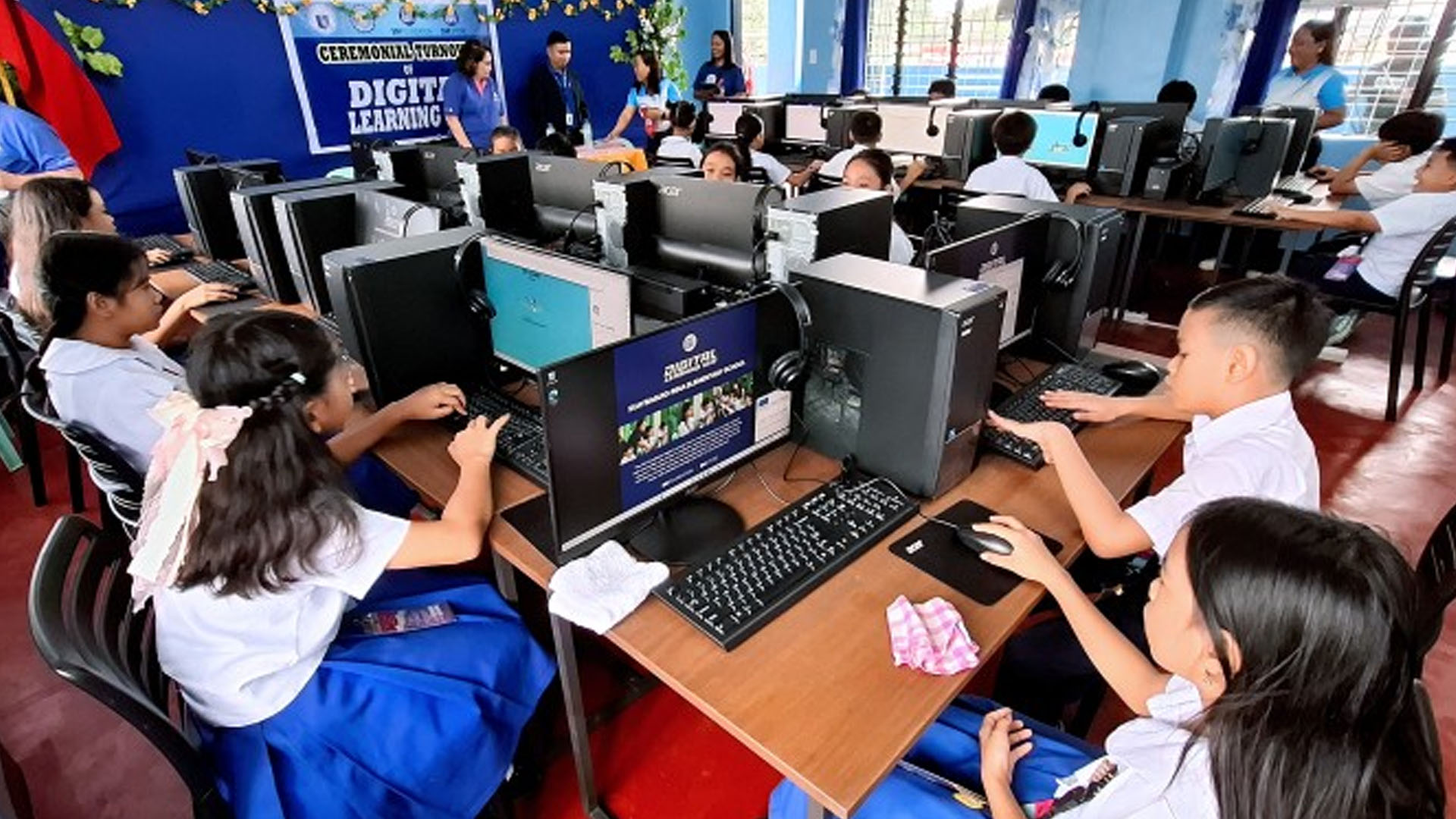
The department is also expanding online training, particularly in digital and information technology skills.
“The President also mentioned the use of modern technology. So, the President is making sure there’s new technology in the classroom, because if our teachers are not digitally savvy, they cannot impart that knowledge to our students. And again, that’s the foundation for things like AI and analytics and all of these data science, all of these new disciplines,” he explained.
Mental health, safer schools
Beyond academics, Angara said DepEd is also paying closer attention to students’ well-being.
“We’re trying to reduce (stress) in our schools because kids nowadays are bombarded with a lot of information, a lot of stress at home. We’re trying to create more peaceful zones along with the thrust of the President towards safer schools,” he said.
He said the department is addressing the shortage of guidance counselors by hiring guidance counselor associates to provide additional support for learners.
To improve learning outcomes, Angara said DepEd is also stepping up efforts to address functional illiteracy by funding reading projects in low-performing municipalities, increasing the supply of books in schools and reviewing teaching methods.
“We’re trying to get more books in the hands of students and encouraging a culture of reading,” he said.
He added that the focus should shift from memorizing lessons to helping students actually understand and apply what they read.
“So, the challenge is really the basics, the ability to read and to comprehend, what we call functional literacy. So, I think that will be the emphasis going forward. And it’s challenging,” Angara said. (PNA)