


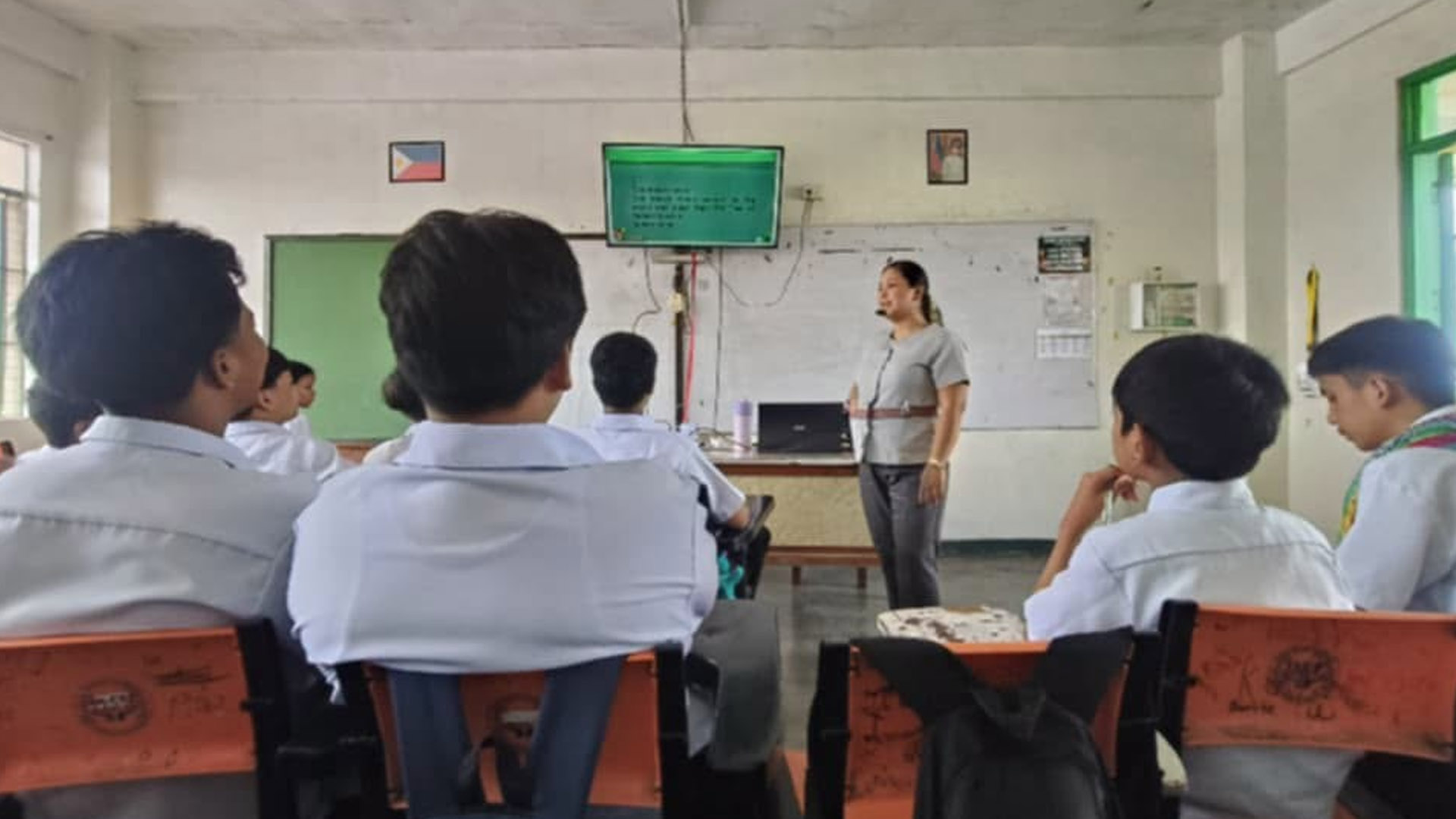







The Department of Education (DepEd) will issue a nationwide policy to protect learners from extreme heat and water shortages as a potentially strong to very strong El Niño threatens to disrupt classes and school feeding services in School Year 2026-2027.
In a news release Monday, Education Secretary Sonny Angara said the guidelines would require schools to prepare for climate-related disruptions, after Philippine Atmospheric, Geophysical and Astronomical Services Administration (PAGASA) advisory warned that El Niño could peak before the end of 2026 and persist through the first half of 2027.
“Under the guidance of President Ferdinand R. Marcos Jr., we are tightening our proactive, protective and anticipatory responses to ensure the adverse effect of El Niño is mitigated,” Angara said.
“We must prepare early to protect learners and keep education services going despite climate-related disruptions,” he added.
DepEd said the policy will establish a four-level response system called “Hayo, Hinay, Hinga and Hinto” (Go, Slow Down, Breath, Stop), or the 4H framework, allowing schools and Community Learning Centers (CLCs) to adjust class schedules and learning activities according to local heat conditions and water availability.
The framework, it said, aligns with DepEd Order No. 014, s. 2026, or the Guidelines on Learning Continuity in Emergencies.
Under Hayo, schools may continue face-to-face classes with precautions such as scheduled water breaks, better classroom ventilation and adjustments to outdoor activities.
At the Hinay level, schools may modify class schedules and shift to home-based or hybrid learning when heat stress becomes a concern.
Under Hinga, which covers extreme heat concerns or water supply interruptions, schools will reduce academic requirements and use printed learning materials and educational broadcasts to prioritize learner’s well-being.
At the Hinto level, academic activities will be suspended when heat conditions become unsafe, while schools maintain communication with families and provide safety checks and referrals for psychosocial support.
“We are giving our school heads and division superintendents the practical flexibility to exercise sound judgment based on actual ground conditions, classroom ventilation, and water availability. We trust our field managers to make the right call for their communities,” Angara said.
The guidelines will require schools to assess water supply reliability, classroom temperatures, ventilation, electricity resilience and fire hazards.
Schools must repair water leaks, establish safe drinking water stations and coordinate with local water utilities on possible rationing.
DepEd will also require schools to stockpile printed Self-Learning Modules and Learning Activity Sheets before peak heat months to ensure learners can continue studying when regular classes are disrupted.
To sustain nutrition services during prolonged dry spells, Schools Division Offices and school heads must prepare contingency menus, coordinate with local government units and agricultural cooperatives for food supplies, and maintain buffer stocks of shelf-stable food for the School-Based Feeding Program.
The DepEd will also prohibit schools from requiring parents to pay for cooling equipment, internet connectivity or specialized clothing as a condition for their children’s participation in flexible learning arrangements. (PNA)