


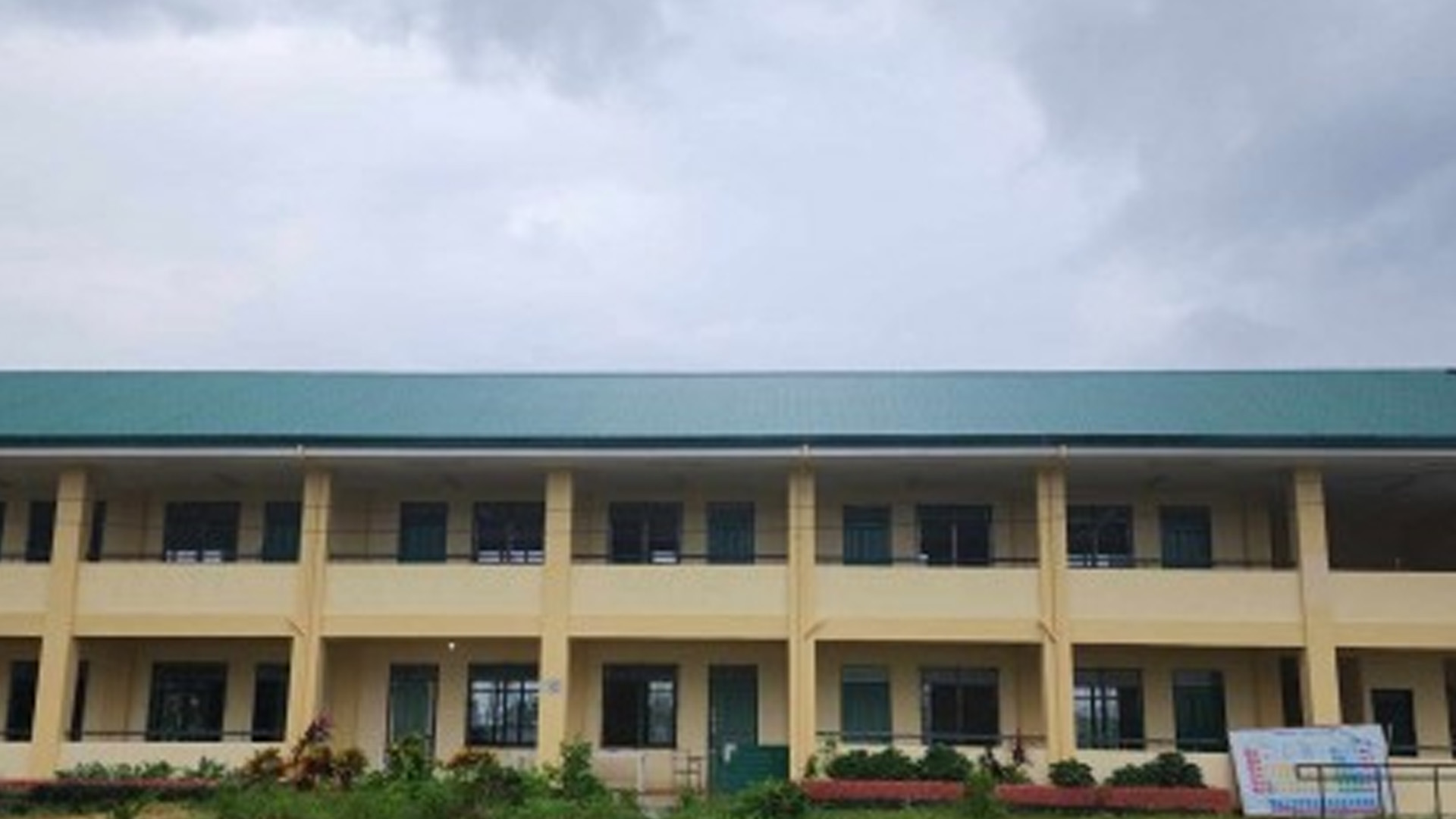







The Department of Education (DepEd) on Thursday reiterated that measures in basic education are in place to cushion the looming impact of the very strong El Niño.
In a television interview, DepEd Secretary Sonny Angara said the actual response will depend on the situation at the local levels, especially during extreme heat.
“We are trying to go as granular as we can para hindi naman (so that it’s not) one size fits all,” he said.
The DepEd earlier announced the implementation of the 4H framework to ensure safety and learning continuity in all schools nationwide.
The four-level framework includes “Hayo, Hinay, Hinga and Hinto” — wherein in-person classes will continue under manageable heat conditions; modified or structured blended learning under heat stress; reduced academic requirements alongside provision of learning packets during extreme heat or shortage of water; and class suspension amid heat index with health risk, respectively.
Angara said both local government units (LGUs) and school administrations have the discretion to implement class suspension or resumption based on actual weather conditions.
Besides ensuring proper ventilation in classrooms and provision of clean drinking water, the education chief mentioned more flexible uniform rules, where physical education (PE) uniform or more comfortable clothes may be worn.
“We are also relaxing the uniform rules for both learners and teachers, basta (as long as) dignified,” Angara said.
Solar power in public schools
Angara, meanwhile, mentioned that the agency will opt for the utilization of solar power to ensure sustainable access to electricity.
“In the long term, dapat mag-solar power na po tayo (we must have solar power). Although it takes time — it’s quite expensive,” he said.
“Ito na ang direksyon natin dahil siguro hindi na magbabago itong climate change natin (This is our direction because perhaps climate change will no longer change). And we are seeing hotter and more extreme weather disturbances.”
In a separate Viber message, Angara said areas most susceptible to extreme heat must be prioritized in solarization.
“Ideally, the more crowded schools and where power is expensive, and hotter areas,” he told the Philippine News Agency.
Angara added that the funding will be sourced through its partnership with the National Electrification Administration (NEA).
In April, the DepEd said it is eyeing the solarization of public schools in 2027.
In February, the agency inked its collaboration with the NEA for the installation of solar photovoltaic (PV) systems to power last mile schools or those in geographically isolated and disadvantaged areas (GIDAs).
Infrastructure equity
The DepEd, meanwhile, stressed its commitment to equity in infrastructure — emphasizing the need for data-driven criteria for classroom construction.
This is in response to the report of the Second Congressional Commission on Education (EDCOM 2) on gaps in allocations for local government units (LGUs), incurring the highest estimated shortages based on initial 2026 allocations.
In a separate statement, Angara acknowledged the EDCOM’s report and assured commitment to secure “strategic partnerships” with qualified LGUs.
“Ang alokasyon natin para sa mga silid-aralan ay dapat direktang tumutugon sa mga eskwelahang pinakamatindi ang pangangailangan (Our allocation for classrooms must directly respond to schools with the most severe needs),” he said.
“Kailangan nakabase sa tunay na datos ang ating mga desisyon para bawat pisong inilalaan natin, tunay na nararamdaman sa ating mga paaralan (Our decision should be based on factual data so that every peso allocated will be truly felt in our schools).”
To date, the agency noted the lack of available buildable space for regular or prefab classrooms in some schools due to the existing unsafe buildings needing to be demolished.
Hence, the DepEd said it is exploring other avenues and other modalities beyond traditional classroom construction.
Part of this is the deployment of a multi-pronged strategy, integrating Department of Public Works and Highways-led construction, LGU partnerships, Public-Private Partnerships, DepEd Learning Continuity Spaces and collaborative initiatives with both government and private sector organizations.
Under the LGU-led classroom construction, allocations cover 439 LGUs, 1,955 schools, and 8,777 classrooms.
This infrastructure rollout spans 81 provincial LGUs accounting for 4,043 classrooms across 1,022 schools; 127 city LGUs covering 3,123 classrooms across 468 schools; and 231 municipal LGUs encompassing 1,611 classrooms across 465 schools.
The DepEd also has tripartite agreements with the Philippine Amusement and Gaming Corporation, with 48 LGUs securing 576 classrooms for construction in priority communities. (PNA)