


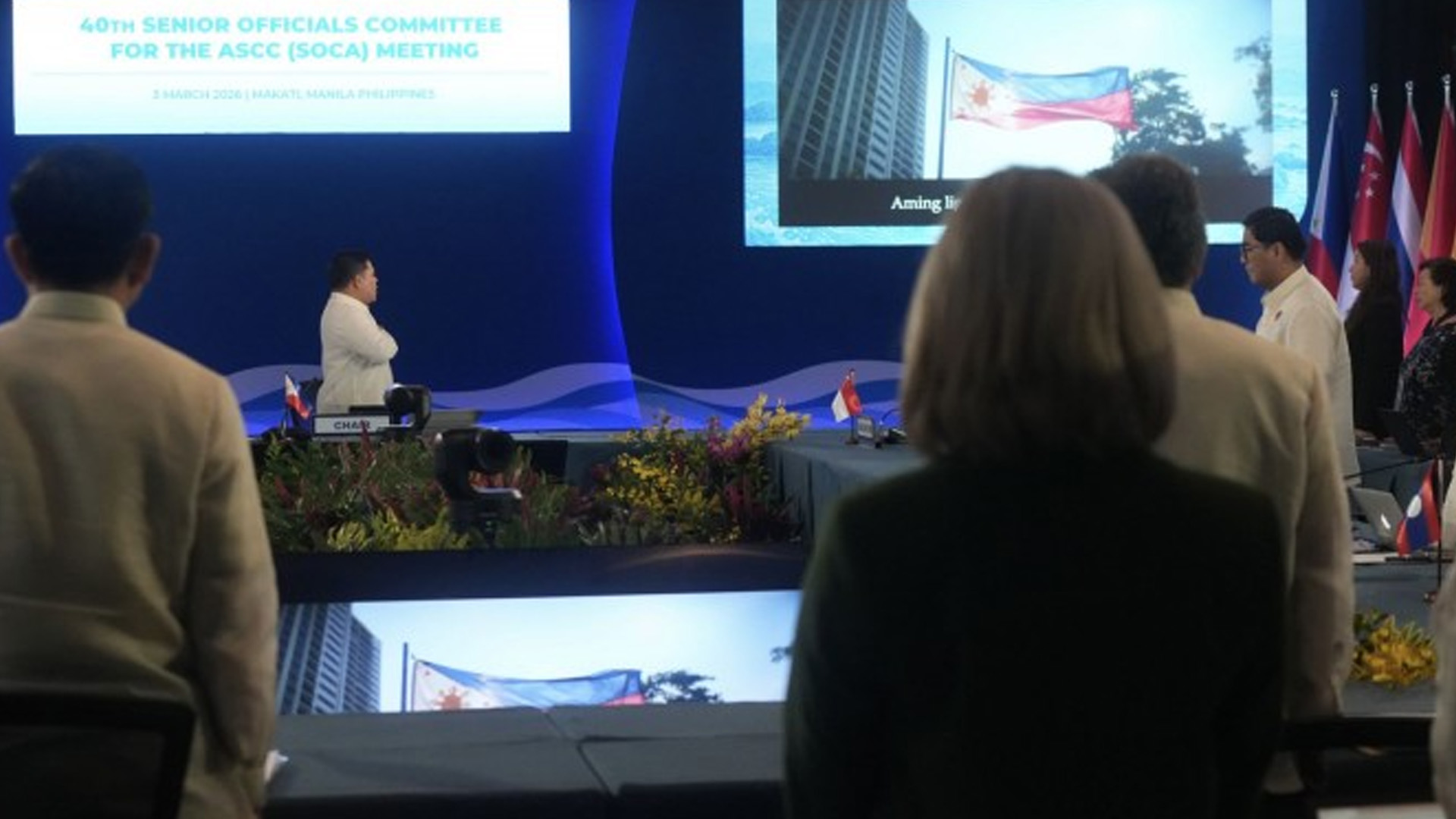







As chair of the 2026 Association of Southeast Asian Nations (ASEAN) Socio-Cultural Community (ASCC), the Philippines will lead the push to strengthen regional efforts towards disaster resilience and food security.
In a news release Tuesday, Department of Social Welfare and Development (DSWD) Assistant Secretary for Disaster Response and Management Group (DRMG) Irene Dumlao stressed that with Southeast Asia as one of the most disaster-prone regions, ASEAN solidarity is very much alive and evolving.
“The Philippines can strongly attest to this because of the immediate help our country received after experiencing devastation from various typhoons and geological hazards from our ASEAN brothers and sisters,” she said.
Dumlao said the Philippines will lead the discussions on the main outcome document, the ASEAN Leaders’ Statement on the Manila-ASEAN Strategic Protocol for Emergency and Comprehensive Transformation (ASPECT) Framework, at the 35th ASCC Council Meeting, where regional ministers will formally adopt key frameworks and finalize priority social policies for Southeast Asia.
“The Manila-ASPECT Framework is a document for adoption of ASEAN member states that will facilitate stronger regional interoperability through standardized coordination, enhanced data sharing and logistics systems, and streamlined cross-border processes ensuring people-oriented and rights-based disaster response efforts in the ASEAN region,” she explained.
Dumlao said the new framework to be adopted is aligned with the “One ASEAN, One Response” vision, which promotes a unified disaster response strategy emphasizing rapid, coordinated and scaled support across the region.
Under the 2026 chairship theme, “Navigating Our Future, Together,” the Philippines will drive measures to strengthen climate resilience, disaster risk reduction and food security.
ASEAN’s previous collaborative frameworks have led to the development of several strategic frameworks that promote shared policies and cooperation among member states in addressing climate change and disaster resilience
These include the ASEAN Multi-sectoral Framework for Climate Change: Agriculture and Forestry Contributing to Food and Nutrition Security and SDGs; the ASEAN Agreement on Disaster Management and Emergency Response (AADMER); and the ASEAN Framework on Anticipatory Action in Disaster Management, among others.
These frameworks have laid the foundation towards this next step.
Dumlao, highlighting the Philippines’ leadership role in regional disaster cooperation, noted that with the Manila-ASPECT Framework, ASEAN countries can respond faster, coordinate better and deliver aid more effectively to vulnerable communities. (PNA)