


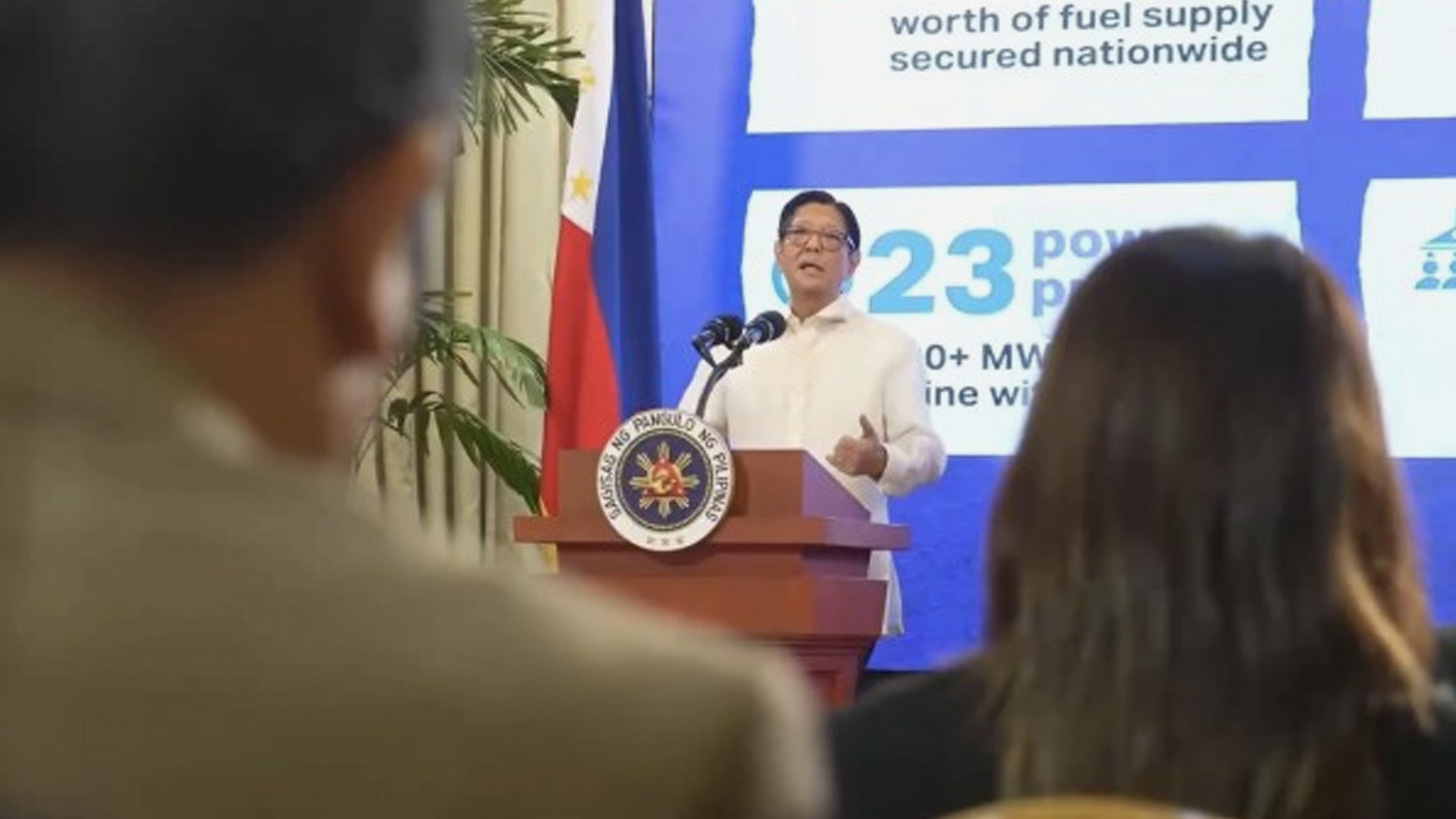







Manufacturers have committed not to increase prices of basic commodities for now, President Ferdinand R. Marcos Jr. said Wednesday, as the government moves to contain the impact of rising global oil prices on consumers.
In a press conference in Malacañang, Marcos said producers assured the government they will maintain current prices for as long as existing inventories last.
“At sumagot na ang ating mga manufacturer na hindi sila magtataas ng presyo ng pangunahing bilihin sa ngayon. At hanggat kaya, nangako naman sila hanggat kaya nila na i-maintain ang presyo (Manufacturers have responded that they will not raise the prices of basic goods for now. And as much as possible, they have committed to maintaining prices),” Marcos said.
“Kaya’t habang nandiyan ang kanilang imbentaryo, nangako sila na hindi nila itataas ang presyo ng mga primary commodities (So while their inventory remains, they have committed not to increase the prices of primary commodities),” he added.
The assurance comes as global oil price volatility, driven by tensions in the Middle East, threatens to push up production and transport costs, which could eventually affect retail prices of essential goods.
The government has been coordinating with manufacturers and industry players as part of a broader strategy to stabilize prices and protect consumers, particularly low- and middle-income households.
Authorities are also rolling out complementary measures, including fuel subsidies for key sectors, expansion of subsidized food programs, and efforts to reduce logistics costs, to prevent price pressures from cascading across the supply chain.
To cushion the impact on consumers, the government is expanding food access programs, including the rollout of free rice distribution by local government units through the Local Government Support Fund (LGSF).
“Ang programang ito ay nagbibigay tayo sa bawat LGU ng pondo at ang hinihingi lang namin sa kanila na minimum 50 percent ng LGSF fund na natatanggap nila ay gawing pambili ng bigas para maipamigay sa kanilang mga constituent (This program provides funds to each LGU, and we are requiring that at least 50 percent of the LGSF they receive be used to purchase rice for distribution to their constituents),” he said.
“Maaari nilang gawin 100 percent na bigas nasa sa kanila ‘yun. Ngunit kailangan at the minimum 50 percent doon sa natanggap nilang pondo ay gagamitin sa pagbili at pagbigay ng bigas (They may allocate up to 100 percent for rice if they choose, but at a minimum, 50 percent of the funds must be used for buying and distributing rice).”
Marcos also said the government is ensuring an adequate supply of agricultural inputs, particularly fertilizer.
To further stabilize food prices, the government has reduced logistics costs for agricultural goods, including the PHP1 (Roll on-Roll off) RoRo terminal fee, and for vehicles carrying agricultural products. (PNA)